the just released schedules were a flat-out statement that the B10 doesn't believe SOS will matter in playoff selection
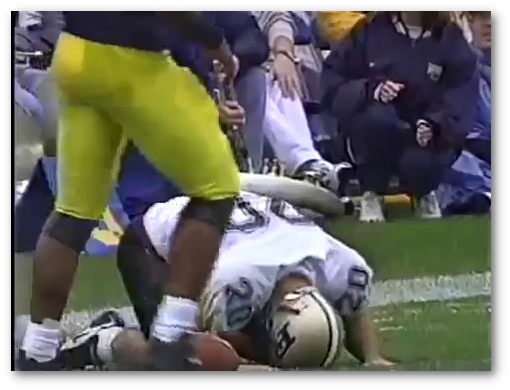
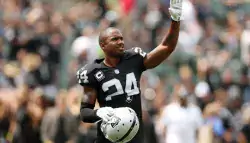
larry foote
Hokepoints: Would Bill Walsh Draft These LBs
Sinestral: Ross, Ryan and Clark|Bryan Fuller, MGoBlog. Dextral: Bill Walsh
First, a Chag Sameach to my fellow tribesmen and a Happy Turtleversary to the wingnuts.
We now continue with the Bill Walshian rundown of the 2013 roster. Since Michigan's offense and defense schemes are kindred spirits of the great 49er teams of the '80s, I've found it somewhat useful to re-scout Michigan's players on the same factors that the legendary coach used to evaluate his draft picks. How do we know what Walsh drafted on? Well wouldn'tchya know it, he provided it in a 1997 article for Pro Sports Exchange that Chris Brown (Smart Football) discovered.
Part the first was the entire offense. Part the second was the interior D-Line. Now we're on to the linebackers, among whom I include the WDEs.
Weakside End
Bruce Smith/ James Hall / Frank Clark by Upchurch
Walsh Says: 6'5/270 or 6'3/245 depending on type. It's complicated so I'm going to spend some extra time here. His DE descriptions bounced between what you want from 3-4 DEs, which is the 3- and 5-tech in Michigan's defense, and pure pass rushers. Ultimately Michigan's WDE is closer to the pass-rush-specialist-who-stops-runs-too job description of a Walshian 3-4 weakside linebacker than a blocker-sucking interior DL, so they go here with the LBs. Speed and quickness are now very much in play:
Must have explosive movement and the ability to cover ground quickly in three to five yards of space. The ability to get your shoulder past the shoulder of the tackle. This makes for a pass rusher. With that there is quickness because it sets up a lot of other things.
From the outside linebackers description we get this:
These pass rushing outside linebackers must have natural gifts, or instincts for dealing with offensive tackles who are up to 100 pounds heavier. Quickness is only part of it. They must know how to use leverage, how to get underneath the larger man's pads and work back toward the quarterback. And he must be strong enough to bounce off blocks and still make the play.
The rush DE needs to have some finesse. This site never misses an opportunity to knock on Will Gholston so I'll do that: Gholston has more than enough explosion and strength, and is an excellent tackler but the big hole in his game is he doesn't get leverage or bounce off blocks. This is why State deployed him mostly SDE this year while Marcus Rush was the premier pass rusher. Walsh says it's all the same if you can push a tackle as go around him, but being an okay jack of all trades here isn't as valuable as being super disruptive at one or the other.
Overall strength is important. You don't have to be a Mike Martin beastmonster in the weight room but a WDE has to be strong enough to not get turned by the tackle. This is also a technique issue though it's not a skill that needs years to develop—a big sophomore year leap is expected at this position as the kid gains weight, strength, and the footwork and balance to be able to keep his shoulders pointed toward the football.
As echoed in Mattison's statements in 2011 regarding WDEs, Walsh calls his rush DEs "the substance off the defensive team" since their ability to put pressure on the quarterback can make or break a defense. This is why great DEs are at such a premium in today's NFL.
The last piece is willpower, which in scouting parlance becomes "high motor." WDEs typically get rotated a lot because they burn a gazillion calories on each play. Because this spot is supposed to win 1-on-1 battles and kill plays himself, success on the second and third moves can make a huge difference.
Walsh's Favorite Wolverine: If James Hall and Larry Stevens had a baby, and that baby came out 6'5/260 and immediately ate the doctor. Michigan just hasn't had the freaks here unless you count Woodley and I'm saving him. Stevens didn't have the sacks but generated hurries. And Hall: because he's 6'2 every scout from the early recruiting years to modern NFL trade talkers underrates him, despite consistent production at every level. Hall is second (to Graham) in career sacks and 6th in TFLs among Wolverines and was the 1997 team's secret weapon. Both guys were often extolled for their virtues under the hood.
What to look for in a Scouting Report: EXPLOSIONS! I know I said this for SDE but even more so. You know these guys on sight because the innate quickness and strength makes them terrors against high schoolers. Skipping over the blue chips (or like Ra'Shede Hageman who would have been a blue chip if he accepted Florida's offer to play DE rather than Minnesota's offer of tight end) 3-stars who shine seem to have athletic tickmarks or the proverbial motor. I noticed some of the big performers from high school All-American games (Ray Drew, Alex Okafor, a million dudes who went to Florida) tend to fare well—about the worst among Army game standouts of yore was Victor Abiamiri, who was still pretty good. The pushers had ridiculous squats (Simon's was 700!)
What you can learn on film: How fast he gets into the backfield, adjusted for competition. You're looking for that quick burst. The great ones just look completely unblockable—like the guy blocking him doesn't seem to have any leverage.
What could signal bust potential: Size. Rivals tends to put its favorite DEs at "SDE" for this reason. If you browse through the five-stars you generally find two categories: high-effort guys who were early contributors and are or are on track to be NFL draft picks at defensive end, and Pierre Woods/Shawn Crable-like linebackers whose recruiting profiles said they would grow into Jevon Kearse. There's a reason they called Kearse "the freak."
How our guys compare: Frank Clark and Brennan Beyer are the two sides of the WDE coin. This refrain from MGoBlog is becoming tiresome but Beyer seems the stronger and more responsible one and Clark is the greater X-factor. We overplay this; both would still fall more into the finesse side than, say, John Simon, and both seem to top out as useful but not stars.
Ojemudia is kind of a James Hall but more akin to Shantee Orr. Where James Hall was small but had the size to stand up to a good shove when needed, here you have a dude with explosiveness and great hands for pass rushing but is going to be dead meat if doubled and run at, and is therefore best deployed as a 3rd down or [blank]-and-long specialist.
Early enrollee Vidauntae "Taco" Charlton, who's already 6'6/265 on Michigan's spring roster, is the closest thing to Walshian dreams. On film though a lot of times you just see him blowing something up because they didn't block him, and though this probably had a lot to do with being way bigger than high school tackles in Central Ohio he didn't play with much leverage after the snap. The reason for all the Tacoptimism is he blew up the camp circuit. He probably still needs a year to work on technique since he spent most of high school in a 2-point stance. Warning: he doesn't check the motor box.
[Linebackers, after a leap.]
2011 Recruiting: Kellen Jones
Previously: CB Greg Brown, CB/S Tamani Carter, CB Blake Countess, CB Delonte Hollowell, CB Raymon Taylor, LB Antonio Poole, LB Desmond Morgan, and LB Frank Clark.
| Houston, TX - 6'1" 210 | |||
| Scout | 4*, #12 MLB | ||
| Rivals | 3*, #29 ILB, #69 TX | ||
| ESPN | 3*, 79, #35 OLB | ||
| Others | NR | ||
| Other Suitors | Arkansas, Texas A&M, Stanford | ||
| YMRMFSPA | Larry Foote | ||
| Previously On MGoBlog | Commitment post from Tim. Tom interviews him and gets some commit quotes. User tomcat sits next to him on a plane and is impressed. | ||
| Notes | Also a small white dude drafted by the Oilers. | ||
|
Film |
|||
|
Those are senior highlights; there is also a junior reel. |
|||
Occasionally, Spartan taunting will cause the message board to recycle a discussion about whether non-alum Michigan fans are real Michigan fans and how the core, I-know-what-Great-Books-is folk should react to them. Kellen Jones's dad Sean is the answer to this question.
The elder Jones grew up wanting to play for Michigan but didn't end up a D-I prospect, but a decade or two after his playing career at Morehead State ended, his influence saw a kid from Houston want nothing more than to don a winged helmet:
Q: How did you end up at Michigan?
A: It was a dream offer from the get-go. My dad’s dream was to go there, and he passed it on to me. It’s Michigan — Big House football. It’s a great academic school with history and tradition, the winningest program in college football, so it’s an all-purpose fit.
Q: So you’re going to be living your dad’s dream. How thrilled is he?
(Dad Sean Jones played at Morehouse College, Martin Luther King Jr.’s alma mater.)
A: He’s so excited. I think he might be more excited than I am. He sings Hail to the Victors. He’s looking up the videos and all types of stuff.
The answer: come one and all, especially if you are a large and mean.
The Jones family's Michigan fandom saw Kellen select Michigan over a wide array of mid-level BCS offers of which Arkansas, Texas A&M, Stanford, and Missouri were the most impressive. Jones made a little bit of noise about opening his recruitment back up when Rodriguez was fired but a couple of phone calls from Hoke and Mattison and he was solid again.
As a result, Michigan has a slashing blitzer on the three/four star borderline who is badly needed. Like Morgan, scouting reports focus on his intelligence. Unlike Morgan, they also praise explosive athleticism. (Morgan's edge is two inches and twenty pounds.)
The best parts of Jones' game are his intelligence and instincts. He has a knack for finding the ball even if he has to wade through the trash. Furthermore, as a high school middle linebacker, he has experience playing the position, which ought to enhance the speed with which he picks up the college game. Once he finds the ball, he's a solid tackler who could be a devastating hitter once he puts on the necessary weight and refines some tackling technique issues.
His highlight film above helps confirm. It features a large number of plays on which Jones has to pick through trash or defeat blocks to get to the ballcarrier. This may be because of its extensive length—a lot of shorter videos leave out scraping plays because they don't often result in HERE COMES THE BOOM—but it may also be because a lot of high school linebackers don't do that kind of thing very often.
That's not to say he doesn't bring the boom:
“He’s just a violent football player. He’s going to leave his mark when he makes contact with you,” Kimball said of Jones …
[Kimball] describes a play not on the highlight film: “…the guy’s momentum stopped going forward instantly. It was amazing that they were both conscious after that hit,” Kimball said. “I don’t know how both of them got up and walked off the field. It was one of those types of collisions that looked like two diesel trucks running into each other.
“Poor running back, he didn’t see it coming, barely.”
Hurray concussions!
“I love to hit, I love to hit,” Jones said laughing. “When the season starts everyone is excited. You hear the fans, the crowd and I love to make contact and knock somebody into the dirt.”
Hurray everything!
“As a linebacker, I’m very instinctive,” said Jones, who has a 3.4 grade-point average and plans to major in mathematics and engineering. “I’m very good on the blitz. I’m aggressive to the ball and I’m a great pass rusher. I’m very passionate about the game.”
Did you have a tingle thinking about a linebacker who understands what a tangent is? I did. This is a signal you have Asperger's disease even if it doesn't exist anymore.
While most list him as an inside linebacker, ESPN and Jones himself believe he can play inside or out. ESPN's take($):
… excellent athlete … Has the size for the outside linebacker position at the major level of competition. We like this guy's flexibility, balance and agility; does a good job with K&D run recognition skills however his strength is the ability to avoid contact and beat blockers to the point of attack with quickness. Moves through traffic very well with good change of direction ability; is able to keep leverage on the ball and is seldom out of position. Flashes downhill ability vs. the inside run but not the big tough inside linebacker type who consistently stacks at the point. … capable of creating havoc in the backfield against the run and pass. Is productive blitzing up the middle or off the edge; shows good timing with quite a few sacks and hurries. … The intense motor this player brings to the field results in big momentum changing plays.
Scout more than echoes the section on his effectiveness as a blitzer:
Amazing on the blitz, he is as instinctual as you can find. He has a feel for getting through blocking and getting in to attack the quarterback, also good at blocking kicks. His size is okay but it is not above average. Good speed he uses it to his advantage on blitzes and coverage. Does a great job of working through blocks.
All things being equal, Jones might be destined for MLB. Things are not equal, though. Michigan has two more years of Kenny Demens in the middle, a potentially solid backup in Marell Evans, and fellow freshman Desmond Morgan. On the weakside there's just Mike Jones and Antonio Poole. While Poole is about the same level of recruit Jones is he's probably 15-20 pounds lighter. Jones could—probably should—be on the two-deep at WLB the day he steps on campus. His long term future could be in the middle, but until Demens departs he's needed on the outside. His coach echoes($) that evaluation:
"I don't think he is going to be there yet to play inside linebacker as an incoming freshman - that's a pretty tall task for any freshman - but at outside linebacker I think he has the ability to come in and play pretty soon," Kimball said. "On the perimeter I think he can make a pretty good impact with what they are doing out there, and over time, as he develops the college bulk to him, I think he can progress into the middle."
That versatility will make it easy for Jones to be on the field early and often even if Brady Hoke is dead set on filling a four-deep at LB.
Etc.: Hanging out with Ray Lewis. Hanging out with… um… Rich Rodriguez. Watch him sign a piece of paper. Played in that "USA vs the World" game. Player of the Week feature from the local Fox affiliate. Extensive interview with The Victors Voice.
One more fawning coach quote($) for the road:
"I don't see how he could be close to maxed out, not because of his physical abilities, but because of his work ethic," Kimball said. "He's almost a straight A student and the strongest guy on the team, but he puts those types of standards on himself... he's really focused for a young man. He does not do anything half throttle, whether that is in the classroom, the weight room or on the practice field. He has a relentless pursuit of perfection."
Aw, hell, here's another:
“We’ve got some great coaches here, but it’s (Jones’) aggressiveness that’s really made him the player he is,” Kimball said. “We spend actually more time at practice telling him to chalk it back a little bit. … We had to tell him, ‘Hey, man, look, we’re just trying to get a look here, you’re running scout team defense of whatever can you maybe give us a better look, because we’re not going to face a guy like you the whole season.’”
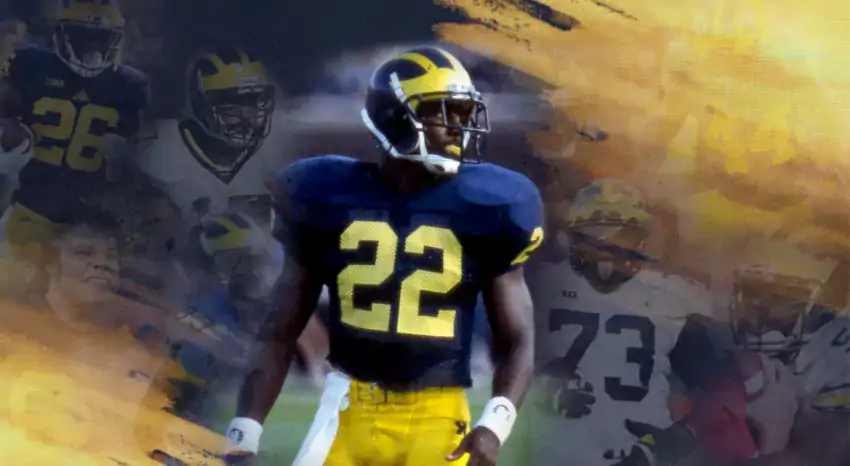
Why Larry Foote? Foote was a slightly undersized linebacker (6-0.5, 240-ish as a senior at Michigan) with good athleticism who could get to the sideline and was at his best when sent on the blitz. He bounced between MLB and WLB; as a senior he annihilated all comers with 23.5 TFLs.
Here's an old scouting report($) from Scout leading up to his NFL draft year:
THE GOOD: Quick, athletic linebacker that flies around the football. Explosive first step moving to action, scrapes well laterally and pursues the ball carrier with speed. Effectively redirects to the ball carrier, displays a quick and fluid change of direction and shows excellent range in pass coverage. Gets depth on his drops, adequate footwork covering backs or tight ends off the line of scrimmage and can play in space. Works hard, plays with reckless abandon and goes sideline to sideline for 60 minutes.
THE BAD: Small, slow shedding blocks or rather easily moved out of his angle of attack. Lacks body control and may not have the flat out speed to be considered at strong safety.
Jones seems to have all of the good bits above and sheds better than Foote—at least against high school competition.
Guru Reliability: Fairly high. Spread in rankings is pretty large, but was healthy at a big school in Houston. Scouting reports are consistent; differences in opinion appear to be due to varying opinion on how well he'll be able to overcome a lack of size.
General Excitement Level: Slightly under high. Size is a limitation, though it shouldn't be a huge one if he doesn't end up in the middle. The experience, athleticism, intelligence, and desire to plant his face into your pancreas at speed all appear to be there.
Projection: Moved to WLB in his first week on campus and probably on the two-deep against Western. No reason to redshirt him with the linebacker flood behind him and Michigan will need him unless Mike Jones is unreasonably good for a meh recruit who missed last year with an injury. Will probably spend the first half of the season spotting Jones—remember that Thomas Gordon will see significant rotation as the nickelback—and then it's 50-50 he takes over the starting job a la Demens.
Long term I think he sticks at WLB since he'll be established there and some combo of Morgan/Bolden/RJS/Ross will turn into a productive middle linebacker. A potential four-year starter.
Unverified Voracity Swings A Toothpick
Winner. I put out the call for someone affiliated with the program to cackle evilly about what's going down in Columbus, and Larry Foote stepped to the plate:
Foote said he expects the NCAA to come down hard on the Buckeyes, who will go before the committee on infractions in August, giving them, he said, "what they deserve."
And what would that be?
"Ten-year ban, take all the victories away, lose 100 scholarships," Foote said, clearly exaggerating. "Give that (bowl money) back and donate it to the rest of the Big Ten teams."
Helpful note on the exaggeration there. Jalen Rose is also unsurprisingly straightforward about his glee (yes, irony); Jimmy King and Brandon Graham fall into the Serious Face About Serious Issue camp.
Also Graham says he really wants see Denard develop into a drop-back passer. Who wants another 3500 words about the shotgun? I'm warning you, people who can be quoted in newspapers about Denard Robinson: I will do this.
Speaking of. Al Borges isn't exactly wrong here…
"Well, the thing we gotta do is play efficiently, Borges told Matt Shepard on WDFN-AM 1130 Detroit, "and by that I mean take care of the ball, number one, because you don't want to put your defense in bad positions, because that will get you beat faster than anything – when your opponent is playing on a short field. "That's first and foremost."
…but I have not missed the "controlling turnovers is job one" meme the last three years. I have missed non-brain-melting turnover margins, though, so maybe I should just shut up and feel the soothing coachspeak flow through me.
Not Willingham, so we've got that going for us. Brady Hoke does not look like a natural with a golf club in his hands. He looks like a bear waving a toothpick:
This is more reassuring than it should be. Also at that link: massive donor Al Glick hanging out with Carr and Hoke. He is very old and tiny.
Yes, there were two separate Michigan golfing events—the Foote quotes come from another Rose Leadership Academy fundraiser—in one weekend. Out of control.
Just a dude. This quote from Mike Martin…
"I'm a really humble guy," Martin said. "I was talking to someone and said, 'I don't look at myself as a big-time senior football player at Michigan. I look at myself as a dude playing a game.' They're like, 'You're awesome.' "
…is awesome. Get your head around that.
I hear tell that varmint convinced Kyle Kalis to commit. You're aware that Kyle Kalis committed to Michigan over the weekend*. You'll be shocked and appalled at what went down to make that happen:
I'm told that Kyle Kalis' stepdad just called into WKNR and said that Kyle is being manipulated by Hoke and his dad.
The head coach of the university of Michigan and one of Kalis's parents conspired to have him accept a scholarship offer from a school that knows who its head coach will be next year and how many scholarships it will have, whereupon his stepfather called a radio station to complain. It's going to be awkward to ask for the mashed potatoes for a while.
Kalis, meanwhile, declared it to be open season in Ohio:
"He is the type of guy I want to play for," Kalis said. "(Hoke) has an incredible amount of passion. I believe the Michigan-Ohio border is now open. I think you're going to see eight or nine guys from the state of Ohio going over to Michigan this year."
They've already got seven nine, so that's not a huge stretch (or any at all). Five-star RB Bri'onte Dunn may or may not be next; he is either 100% committed to Ohio State or sort of committed to Ohio State or technically committed to Ohio State but actually encouraging Kalis to defect, which was a wild rumor I thought I saw somewhere but I can't track down and therefore probably isn't true.
*[Something that was on the verge of happening for a couple weeks now. That was why Tom posted the "buckle up" tweet that riled up the board. #nowitcanbetold]
Which is it? Even I think Brooks has been a little unhinged about this Ohio State stuff but he does do a service by pointing out the ever-shifting story behind Tressel's firing/resignation/retirement. May 30th:
“Jim Tressel decided to resign.”
June 12th:
Tressel was not told he would be fired if he didn’t quit, Gee said.
“He was not given an ultimatum.”
That's directly contradicted by OSU's response, which pats itself on the back over and over again for "seeking and accepting" Tressel's resignation, as well as planning to ban Tressel from recruiting for a year—but not bothering to announce or, you know, actually do it.
The school also praises itself for self-reporting when the legal department found the Tressel emails as they responded to a FOIA—without someone else asking for information they never would have found the violation.
Etc.: Touch The Banner interviews Jack Miller. Some complicated calculations about Brady Hoke's record being more than meets the eye. Five stars appear next to Greg Mattison's name. NEEDS MOAR STARS. WVU linebacker Branko Busick charged with armed robbery. The weapon: his name. Also his dad had a short career as a WWF heel with an epic mustache in the mid-90s. (HT: DocSat)
Of The Decade: Michigan's Defense
- brandon graham
- dan rumishek
- david harris
- donovan warren
- ernest shazor
- gabe watson
- garrett rivas
- grant bowman
- jamar adams
- jeremy lesueur
- julius curry
- lamarr woodley
- larry foote
- lawrence reid
- leon hall
- marlin jackson
- of the decade
- pierre woods
- shawn crable
- terrance taylor
- tim jamison
- victor hobson
- zoltan mesko
- alan branch
Previously in this series: ESPN Images and Michigan's Offense.
DEFENSIVE END
Brandon Graham (2009) & Lamarr Woodley (2006)
Slam dunk locks and mirror images, Brandon Graham and Lamarr Woodley set the standard for Michigan quarterback terror in the aughts. Wildly hyped in-state recruits and five stars, both spent a couple of years as underclassmen playing here and there and making people wonder if and when they would live up to their billings; both did so emphatically as juniors and then managed to top those performances as seniors. A large portion of last year's defensive UFRs not given over to rending of garments was spent wondering whether Brandon Graham was actually better than Woodley.
Survey says: yes, amazingly.
There was a mailbag question that explicitly addressed it:
I think Graham is better. I haven't gone over the UFR numbers yet—slightly busy this time of year—but I know Graham set a record against Michigan State earlier this year and has been owning offensive tackles all year. Woodley set standards by being consistently around +8 or +9 with forays up to 12; Graham's baseline is around 12 and ranges up to 18.
Though he didn't win the Lombardi like Woodley did his senior year, Graham led the nation in TFLs and was drafted about a full round higher by the NFL. While Woodley was more heralded in the award department, that had a lot to do with the other guys on defense. Woodley's compatriots will pepper the rest of this list. Graham's not so much. Woodley lined up next to Alan Branch, Terrance Taylor, and a senior Rondell Biggs; Graham's bookend was a true freshman and his other linemates were just sophomores.
Lamarr Woodley, meanwhile, did with the Lombardi in 2006, the first and to-date last time a Michigan player has won it. His season was statistically frustrating since, like Graham, he was close to a dozen additional sacks that a competent secondary would have seen him put up truly ludicrous numbers. Even so he had 12 sacks and 4 forced fumbles; outside TFLs were low (just three) but that can be chalked up to the rest of the defense taking up that burden. As mentioned above, he was the original gangsta of the UFR, averaging close to double-digit plus ratings on a weekly basis.
But all that pales in comparison to the play that finished the "Oh Wide Open" game in which Michigan established itself a contender. By scooping up an unforced Brady Quinn fumble and fending off ND tight end John Carlson all the way to the endzone, Woodley inaugurated the Yakety Sax era:
I just watched that three more times.
Second Team: Dan Rumishek (2001), Tim Jamison (2007 or 2008, take your pick)
It gets muddy past the slam dunks. Michigan's quasi 3-4 from the beginning of the decade makes decisions difficult, as does that one year Michigan switched to an actual 3-4. In 2001, Dan Rumishek was on the All Big Ten team with just 22 tackles. Seven were sacks, but man. That same year Shantee Orr managed 35 tackles with six sacks and 10 TFLs, but didn't show up on all conference teams. Later editions of defensive ends would have almost identical big play numbers but way more tackles. Tim Jamison had 10 TFLs and 5.5 sacks as a junior and senior but had 52 and 50 tackles.
Past Rumishek, Orr, and Jamison pickings are slim. Rondell Biggs was the unheralded guy on the 2006 line, a decent plugger but nothing special. A post-career steroid bust also gives his career an unpleasant sheen. Larry Stevens's career was very long but largely anonymous. He's best remembered for being hog-tied on the Spartan Bob play.
We'll go with Dan Rumishek, the only other Michigan DE to get on an All Big Ten team this decade, and one of Tim Jamison's upperclass seasons. Which is entirely up to the reader since they are essentially identical; I lean towards '07 because Graham was not yet a beast and Jamison saw more attention.
DEFENSIVE TACKLE
Alan Branch (2006) & Gabe Watson (2005)
Alan Branch:
That will do.
His statistics were not ridiculous (25 tackles, 5 TFL, 2 sacks in '06) but when he left for the NFL draft I thought to myself "this is a logical thing because he will go in the top five." Surprisingly he did not, falling to the top of the second round, but when you are primarily responsible for opponents going six of eighteen on third and one you get dropped onto the All Decade Team no questions asked.
Watson will be a more controversial choice but the guy was a two-time All Big Ten selection and is currently an NFL player. At Michigan he never quite lived up to his copious recruiting hype but he did have some pretty nice statistics for a nose tackle: 40 tackles, 6 TFLs, and 2 sacks as a senior with almost identical numbers from the year before. The primary issue with Michigan's run defense in '05 was that Watson would drive his guy yards into the backfield, forcing the tailback to cut upfield into the gaping hole left because Pat Massey was 6'8" and therefore getting crushed backwards as far as the guy futilely attempting to contain Watson.
The year before Michigan had their one-off experiment with the 3-4, leaving Watson all alone in the middle, where he dominated. In the aftermath of Watson's one-game suspension for being approximately spherical to start the '05 season, I attempted to adjust for Michigan's tendency to give up a lot of nothing and then a lot of huge runs in the spirit of Football Outsider's "adjusted line yards" and came up with the number 2.5, which was better than anyone in the NFL by three tenths of a yard. (Schedules are much more balanced there, FWIW.) Watson may have been an overrated recruit, but his Michigan career has been underrated.
Second Team: Terrance Taylor(2007), Grant Bowman (2003)
This is actually Taylor's junior season, when he lined up next to Will Johnson, a sophomore Brandon Graham, and Tim Jamison and managed impressive-for-a-DT numbers: 55 tackles, 8.5 TFLs, 3.5 sacks. He'd drop off considerably in his doomed senior year; whether that was a falloff in play or just collateral damage from the wholesale implosion around him is in the eye of the beholder. My opinion is the latter since Taylor tended to beat a lot of blocks only to see poor linebacker play rob him of opportunities in the run game; he was never much of a pass rusher.
We'll go with Taylor's statistically productive 2007 over 2008 because he was just about as good via the eyeball then and had more to show for it. Either way he is an easy pick.
The last spot is not easy. Early in the decade, Michigan defensive tackles were excruciatingly bored guys who spent football games blocking offensive lineman and letting linebackers take all the glory. In 2001 Shawn Lazarus started 12 games and managed 16 tackles. In the absence of accolades, statistics, or personal remembrances I can't put Lazarus or Eric Wilson or Norman Heuer in here even though I couldn't tell you whether or not those guys were even good. The guys not on the list who I do have personal remembrances of were not very good or are still on the team.
It's a debate between Grant Bowman, who I don't remember much about other than his mother was attacked by the usual band of Columbus idiots one year, and… yeah, Mike Martin and Ryan Van Bergen. Bowman's 2003 featured 36 tackles, 8 TFLs, and 3 sacks; Van Bergen had 40, 6, and 5; Martin 51, 8.5, and two sacks. Bowman's defense was infinitely better (22nd nationally in rush defense) than either Martin's or Van Bergen's but without the UFRs sitting around it's hard to tell how much of that had to do with Bowman and how much was the contributions of Pierre Woods, Carl Diggs, Lawrence Reid, and the profusion of non walk—ons in the secondary.
The tentative nod goes to Bowman if only because the rest of the line that year was Heuer, Massey, and someone the Bentley doesn't even bother to list but is surely Larry Stevens. Even if he had more help behind him, being the best player on a line that did pretty well against the run is a tiebreaker here.
LINEBACKER
David Harris (2006), Larry Foote (2001), Victor Hobson (2002)
A couple years ago I was editing a Hail to the Victors article about the considerable difference between David Harris and Obi Ezeh that referenced a couple plays from the '06 season. The diagrams, as diagrams are often wont to be, were confusing so I set about looking at the play myself so I could break the diagram out into three or four separate ones that would explain things in a more leisurely fashion. This was the result:
I swear to God I saw David Harris read not only the direction of a run play, the blocking scheme of that play, and which offensive lineman was assigned to him but modeled the lineman's brain and duped him into thinking the play had cut back. I found this terribly exciting.
That was just another boulder on the pile of reasons I love David Harris. He looks like Worf. He tackled everyone all the time and never did not tackle anyone. He was the first player I felt I was ahead of the curve on thanks to UFRing the games—like David Molk I think I was the first person in the media to recognize that this unheralded player was the balls, which made me feel like Dr. Z. And he kept tackling people. At some point in 2006 the Greek gods descended from the clouds and borrowed him for a while because the eagle that eats Prometheus's liver was on strike.
Then the Lions passed on him and Lamarr Woodley to take Drew Stanton, guaranteeing that the pair would instantly become two of the best defensive players in the league. Yeah. David Harris. I miss him so much.
Larry Foote had a less tangential connection to the worst franchise in sports, but outside of that one-off decision his career has been a good one. As an upperclassman he was an all-around terror, notching 19 TFLs in 2000 and 26 in 2001 at the same time as he picked up a total of 16 PBUs. In 2000 he actually had more of the latter than Todd Howard, and Todd Howard got some of his when the ball deflected off the back of his helmet. Foote was what Jonas Mouton was supposed to be.
We'll go with Foote's senior year when his sack total leapt from one to six and he was named the Big Ten Defensive Player of the Year en route to a smattering of All-American honors. A fourth-round pick of the Steelers, Foote's NFL career has been long and productive; he gets a small dollop of bonus points for being one of the current NFL crew frequently seen hanging out with Barwis.
The final member of the first team had to beat out stiff competition but Victor Hobson gets the nod because he was by far the best player on his front seven (Rumishek, Bowman, Lazarus, Stevens, Orr, Diggs, and Zach Kaufman(!) were the other major conributors) in 2002 and racked up the best all-around numbers of any linebacker under consideration: 99 tackles, 13 for loss, 5.5 sacks, and two interceptions. One of those was the Outback-sealing reverse pass interception. Hobson was deservedly All Big Ten on a team that finished 9th in the final rankings and 31st in rushing defense despite having zero future NFL players other than Hobson and an injury-stricken Orr.
Second Team: Pierre Woods(2003), Shawn Crable(2007), Lawrence Reid(2004)
Pierre Woods did something almost but not quite bad enough to get booted off the team after his breakout sophomore season (68 tackles, 14 TFL, 7 sacks) and spent the rest of his career playing sparingly—probably the only thing that has infuriated both Ted Ginn Sr and myself—until injury forced Michigan to deploy him extensively in the '05 Iowa game, whereupon he totally saved Michigan's bacon. Though he'd moved to defensive end by then, his bust-out year was at linebacker so here he goes.
Poor star-crossed Shawn Crable will go down in history as the best player to ever put on a winged helmet who Michigan fans have exclusively terrible memories of. In the span of three games at the end of the 2006 season and beginning of 2007, Crable delivered a helmet-to-helmet hit on a scrambling Troy Smith that turned a fourth-down punt into first down and eventually the winning points for OSU and failed to execute a simple blocking assignment on the field goal that could have turned The Horror into the worst win ever.
When he wasn't doing either of those things, though, he was a unique weapon. He is the current holder of Michigan's TFL record and spent his college days bouncing from linebacker to defensive end to crazy 6'6" chicken-legged defensive tackle in certain spread packages, finding ways into the backfield wherever he lined up. He also was the Ryan Mallett of defense as an underclassman, overran a bunch of plays even after he got his head on straight, and appears twice on the upcoming Worst Moments Of The Decade list. That disqualifies him from the first team, but not the second.
Finally, Lawrence Reid saw his career end prematurely as his back went out; late in the 2004 season it was clear he was laboring. Despite that he finished with 70 tackles, 12 for loss, 3 sacks, and an interception. Without the injury his senior season could have made it on to the first team… and seriously aided the 2005 team's efforts to not play the unready Shawn Crable.
CORNERBACK
Marlin Jackson(2002), Leon Hall(2006)
Leon Hall was sneaky great, one of the few players that the NFL ended up drafting well before I expected them to. Before Hall went halfway through the first round I'd pegged him as another LeSueur sort who'd go in the second and have a decent career; instead he's kind of ridiculously good. Hall leapt into the starting lineup midway through his freshman year an continued improving until he was a hidden beast on the '06 team. Hall's tackles declined from 61 to 45 as teams targeted neophyte Morgan Trent and whichever slot receiver Chris Graham had no hope of covering. At the same time his PBUs leapt from 5 to 15(!). That's impressive. Hall was a deserved Thorpe finalist.
Jackson, meanwhile, has the rare privilege of being the only sophomore to feature in the All-Decade first team. His opening-day matchup against Reggie Williams, Washington's star receiver and a player who had seriously considered Michigan before choosing to stay home, was electric. Jackson got in Williams's grill all day and the Huskies would not back off; by the third quarter he'd set an all-time Michigan record for pass breakups.
By the end of the year he was a second-team All-American to the AP, third team to Sporting News, and (whoopee!) first team to College Football News. He would spent his junior year at safety, battling injury, and though a return to corner as a senior found him on All-America teams again, Jackson never quite recaptured that sophomore magic.
Second team: Jeremy LeSueur (2003), Donovan Warren (2009)
LeSueur was a true rarity on the Michigan roster: a kid who managed to escape the state of Mississippi's immense gravitational pull. He started off slightly wonky—it was his face-mask penalty on Charles Rogers that extended Michigan State's final drive in 2001, setting up both the Spartan Bob play and Lloyd Carr's public dressing-down of Drew Sharp—but finally developed into the guy I thought Leon Hall was: an All-Big Ten type of player destined for a solid NFL career. That wasn't quite the case—LeSueur is currently playing for Bon Jovi, but no one else from the decade comes close.
The final spot is a tossup between Morgan Trent in the one year he wasn't clueless or unmotivated (2007), Donovan Warren this year, Grant Mason's year that exemplifies totally average play, and the nine starts James Whitley made in 2000 before succumbing to his personal demons. The vote here is for Warren, who I actually thought was good, over Trent, who I thought was okay trending towards good.
SAFETY… SORT OF
Jamar Adams (2007), Julius Curry (2000)
Michigan fans will be unsurprised to find a wasteland here after nine defensive positions occupied by world-wrecking All-Americans who have embarked on long NFL careers—everyone on the first team to this point is still in the NFL and almost all will start this year. Safety? Well, Cato June is still kicking around as a linebacker, but at Michigan he was a wreck thanks to an ACL tear that took years for him to fully recover from. And that's almost it.
The almost: Jamar Adams, bless his heart, was the closest thing to a star safety Michigan had in the aughts. He was actually good. Not good enough to get on the All Big Ten first team or get drafted, but good enough to be on the second team two years running and stick with the Seahawks long enough to actually get on the field in six games last year. This makes him a slam-dunk lock as the best safety in the last ten years of Michigan football.
And now: guh. After Adams it's a choice between the most massively overrated Michigan player of the decade—Ernest Shazor—or the guys towards the beginning of the aughts that no one remembers being specifically terrible. You can feel free to disagree but there is no way I'm putting Shazor here. While he did decapitate Dorien Bryant in that one Purdue game, his Michigan career ceased there unbeknownst to the coaches and most of the fans. He was about 80% of the reason Braylon Edwards had to hulk up and smash Michigan State in the Braylonfest game and when he entered the NFL draft he went from a projected second-round pick to totally undrafted, but not before various organizations made him a first-team All American. I will exercise my Minute Observer of Michigan Football privileges and say this: ha, ha, ha.
The problem then is that as I went through the names that vaguely occupied the safety spots for Michigan over the last decade I thought to myself "I should probably write down Willis Barringer and Brandent Englemon." Sadly, I cannot vouch for two guys who couldn't stay healthy or maintain their starting jobs, nor can I seriously support anyone I've seen take the field in the UFR era. So let's reach back into the long, long ago when memories are fuzzy and haul out easily the most unlikely member of the All Aughts: Julius Curry.
I can't tell you that I have detailed knowledge of Curry's play anymore, but I do remember liking the guy a lot and being seriously disappointed when his junior and senior years were wrecked by injury. As a sophomore in 2000, he put up an impressive collection of statistics: 59 tackles, 5 TFLs, 5 PBUs, and 3 forced fumbles, plus two interceptions, one of which he returned for a touchdown against Ohio State in a 38-26 win. Michigan managed to scrape out the 49th-best pass efficiency defense despite deploying Todd Howard and a very confused James Whitley—this was the heart of the "suspects" era—thanks to Curry's unregarded efforts. Maybe he never decapitated anyone, but by God he definitely would have tackled DeAndra Cobb by the second time.
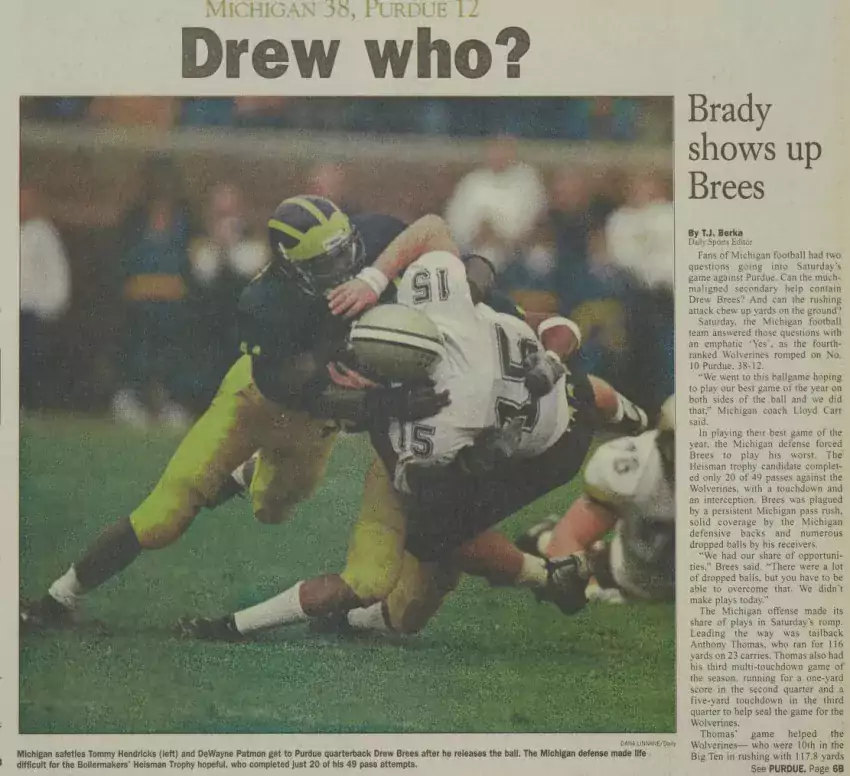
Second Team: DeWayne Patmon(2000), Ernest Shazor(2004)
Patmon was the second member of the safety unit I remember not being specifically terrified about; Shazor was discussed above. He does deserve to be here because even if he gave up a ton of big plays he made more big plays in Michigan's favor than the other safeties kicking around this decade, and those guys gave up about as many plays.
Kicker
Garrett Rivas (2006)
Rivas never had a huge leg but he was good out to 47-48 yards and stands as the most accurate kicker of the decade, hitting 64 of 82 in his four years as Michigan's kicker. That's a 78% strike rate; in 2006 he checked in at 85%. He was reliable, and that's all you ask for in a college kicker.
Punter
Zoltan Mesko (2009)
Obviously. All hail Zoltan the Inconceivable.