shotgun
9/13/2014 – Michigan 34, Miami (Not That Miami) 10 – 2-1
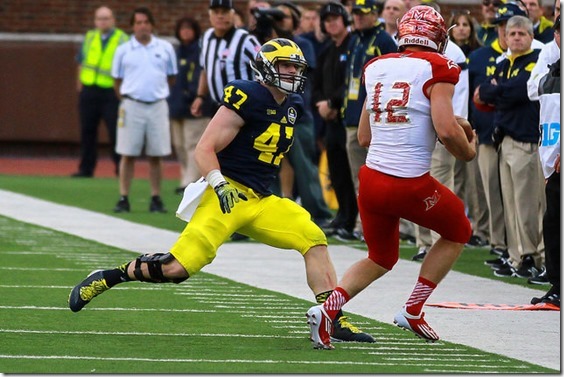
Jake Ryan did a good job of not blowing up Hendrix for penalties [Eric Upchurch]
Michigan Stadium was a roomy place on Saturday, somewhat full of cranky people waiting for an opportunity to vent their ire. They held their fire after a Gardner interception; they held their fire when Michigan was tied 10-10 with a team that hadn't won a game since 2012 midway through the second quarter.
This was a bit of a surprise. Hell, the 1997 team(!) got booed at halftime of their game against Iowa when they went into the locker room down 21-7. (This was definitely performance-related, exacerbated by a late Tim Dwight punt return touchdown. The tenor of the boo was WE KNOW YOU ARE BETTER THAN THIS LET'S GOOOO and when they came out of the locker room the corresponding cheer was much louder than it usually is. But damn we used to have some expectations.)
In 2014, after seven years of mostly unrelenting failure, on the heels of a humiliating shutout in the Last Notre Dame Game, I was expecting more audible grumbles. Michigan fans held off, possibly too stunned by last week to do anything but meekly absorb events in front of them.
Then Michigan took a delay of game penalty (after a timeout!) and decided to punt from the Miami 37 with a minute left in the half. This was pure coaching malpractice that reminded a grumbly Michigan Stadium of last year's Penn State game. The boos rained down. It was loud. It was grumbly. It was statistically accurate.
--------------------------------
As the game rolled along and Michigan proved themselves about as superior as you'd think they should be, this game receded from the hateful constellation of lower-level matchups that turned into stomach-churning wins or even losses.
When you end up giving up fewer than 200 yards to an opposing offense you've established that they are very bad and you are not. Eventually Michigan's ground game kicked in and put up similar YOU ARE BAD numbers. Erase some pretty random turnovers (deflected pass at the line, redshirt freshman pop-up kickoff fumble) and this is 45-0 or thereabouts.
I know you don't believe turnovers are random, person on the internet who I am anticipating a "LOL" comment from, but even you have to admit that when a throw goes from probably on target to directly in the chest of an opposing player because it glances off a fingertip that's just life giving you the middle finger, and not—oh you just said MAKE PLAYS in seriousness on the radio nevermind this sentence. Players make plays. Etc.
Anyway: in retrospect I am not stressing about this game.
I was in the second quarter, like everyone else, and while I didn't actually boo—I am in the too-shocked-to-do-anything club—I agreed with it. What's more, I deeply appreciated that the people still mad enough to let someone know about it waited for the perfect moment.
-------------------------
When Pat Fitzgerald was asked about Northwestern fans being upset in the aftermath of the Wildcats' 0-2 start, he responded thusly.
"No shit."
This is a press conference answer to get behind. It is brief, quotable, and addresses the situation. Fitzgerald is not surprised that fans are upset; he is upset (he called the team "an embarrassment to anyone that ever put on the purple and white"); fans should be too.
When Brady Hoke was asked an open-ended question about his message to the fans, he said this:
As far as the fans that watch from the outside and see some of the similar issues that they saw last season, what would you say to them and how concerning is it as a coaching staff?
"If they’re truly fans they'll believe in these kids and what they've done and the hard work that they've put in. If they’re not, they won't."
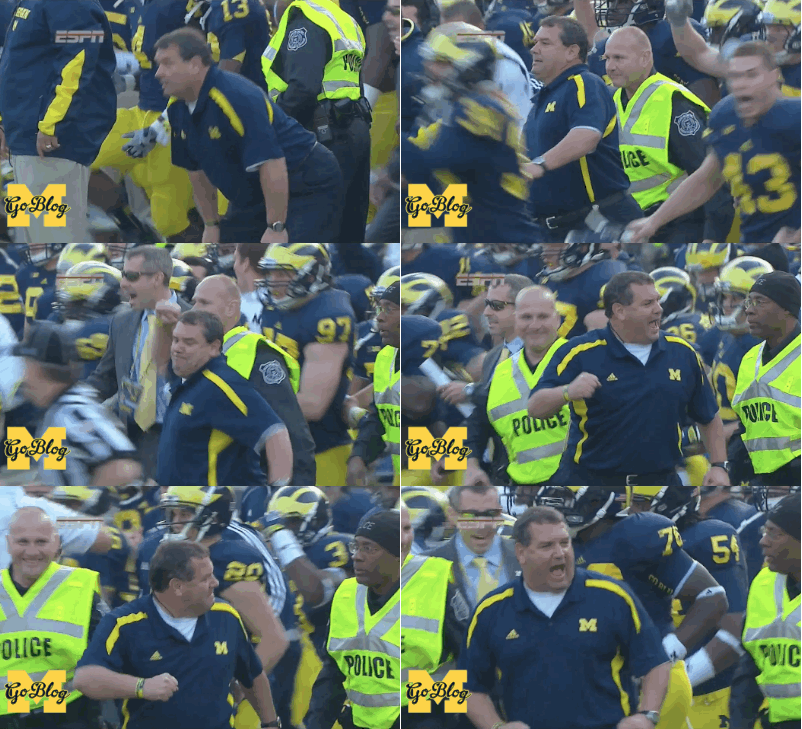
To the great misfortune of someone whose words are repeated verbatim on the internet, he would later claim to be misquoted. At least he has been told that knocking the fans who pay his salary and are currently leaning towards "tar and feather" over "put FOR SALE signs on front lawn" is not great, Bob.
But he has succumbed to the post-9/11 Godwin's Law: eventually someone in charge of the troops is going to tell you to support the troops, because he thinks that's the best argument he's got left. You think knocking over tinpot dictators halfway across the world with no real hope of installing anything that won't collapse the minute you leave is a bad idea? Support the troops, buddy. Why don't you support the troops?
So kudos to Michigan Stadium for holding its fire until the guy on the sideline with the timeout blundered his way into a fourth and eleven punt that went into the endzone on the fly. It was 1000% clear who was and was not supported at that moment.
Michigan is at least tolerant of the troops even when they're struggling against Not That Miami. Michigan is pissed off at the guys in charge. No amount of deflection will hide that fact.
Highlights
Awards
![brady-hoke-epic-double-point_thumb_31[2]](https://mgoblog.com/sites/mgoblog.com/files/images/05d6194b423a_3782/brady-hoke-epic-double-point_thumb_312.png "brady-hoke-epic-double-point_thumb_31[2]") Brady Hoke Epic Double Points Of The Week. #1 is Derrick Green, who was often the recipient of gaping holes but hit them and even made some yards himself.
Brady Hoke Epic Double Points Of The Week. #1 is Derrick Green, who was often the recipient of gaping holes but hit them and even made some yards himself.
#2 is Jourdan Lewis, who turned in excellent coverage all day and came up with an excellent interception.
#3 is Brennen Beyer, because it is impossible to really distinguish between the various guys whipping up on Miami's OL but Beyer got a sack.
Honorable mention:
Epic Double Point Standings.
6: Devin Funchess (#1, APP, #1 ND)
3: Derrick Green(#1 MIA)
2: Devin Gardner (#2, APP), Willie Henry (#2 ND), Jourdan Lewis (#2 MIA)
1: Ryan Glasgow (#3, ND), Brennen Beyer(#3 MIA)
0.5: Kyle Kalis (T3, APP), Ben Braden (T3, APP)
Brady Hoke Epic Double Fist-Pump Of The Week.
For the single individual best moment.
This was a one yard run but let us sit and savor the fact that even against a terrible defense Michigan had a touchdown that looked like this.
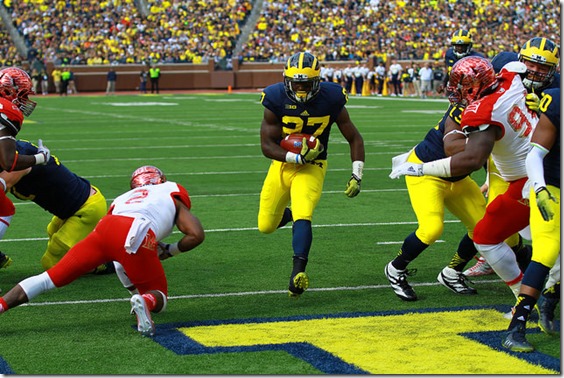
[Upchurch]
Honorable mention: Jake Butt shakes free for a fake screen(!) touchdown, something we haven't seen since Hoke's arrival. Jourdan Lewis runs a guy's fade for him, picks off a ball thrown too far inside. Dennis Norfleet and the KO unit execute a right-sided return on a kick to the left out to the 50. Derrick Green breaks backside and breaks a tackle for a 20-yard gain.
Epic Double Fist-Pumps Past.
AppSt: Derrick Green rumbles for 60 yards.
ND: Nothing.
MIA: Derrick Green scores a goal line touchdown without being so much as touched.
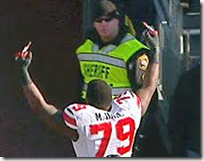 MARCUS HALL EPIC DOUBLE BIRD OF THE WEEK.
Worst. Event. Ever. This Week.
Devin Funchess standing on the sideline because Michigan threw him a bubble screen halfway through the fourth quarter of a 31-0 game.
Honorable mention: Delay of game ack ack ack, Gardner interception (deflected, FWIW), kickoff mishap, Darboh fumble, various early runs that didn't go anywhere.
PREVIOUS EPBs
AppSt: Devin Gardner dares to throw an incomplete pass.
ND: Countess nowhere to be found on fourth and three.
Miami: You did what to Funchess now when?
[After the JUMP: getting it together, strangling the opposing offense, and goodbye gun.]

![oregon_auburn_zone_read_rollout_1a[1]](https://mgoblog.com/sites/mgoblog.com/files/images/765a18fa0451_DE86/oregon_auburn_zone_read_rollout_1a1.png "oregon_auburn_zone_read_rollout_1a[1]")
Brian,
Reading your 11/26 post about "The Game", I noticed you made mention of the question of whether huddling is necessary anymore. As a high school coach and former small college player who has used both the huddle and the no-huddle, my first reaction is to disagree with your point that the huddle is archaic and a bit of a dinosaur. But I am also intrigued.
My overall response would be that there are obvious advantages to both. Points and tempo are the obvious gains, but tempo is also a negative from the no huddle (as we learned circa 2009-2011) when an offense has too many three and outs and a team's defense bears the brunt of it all. In short, it's hard to praise a defense, especially an overachieving bunch like our boys, while touting an offensive style that so often seems to lead to a loss in defensive production.
In short, what data is out there to suggest that the no huddle would not obliterate our defensive gains?
-chewieblue
There are two issues here being conflated here. Not huddling is not necessarily synonymous with going at a high speed. Ohio State runs the same no-huddle style as Oregon but does not push the pedal down nearly as much:
| Team | Offensive Plays | Defensive Plays | Total | % Plays on offense |
|---|---|---|---|---|
| Oregon | 989 | 915 | 1904 | 52% |
| Michigan | 738 | 791 | 1529 | 48% |
| Ohio State | 837 | 849 | 1686 | 49% |
Oregon games had 24% more plays in them than Michigan games; Ohio State games had just 10% more, and I'm guessing the difference there is more Michigan being exceptionally slow than Ohio State being fast: decidedly MANBALL Wisconsin games featured a little over 1600 plays this year. If OSU is over the national average for plays run it's not by much.
The benefits of getting to the line immediately are the same whether you're going fast or slow: the defense is hampered in its ability to substitute and you can see how they align as you make your playcall. You can sprinkle in tempo plays when you have an advantage without cracking the whip up and down the field.
The other issue is how a high tempo affects your defense. This is the reason people invented tempo-free basketball statistics: how fast you go can distort how your offense and defense look. A high-tempo approach artificially inflates the former and deflates the latter.
Take the most extreme possible example: Oregon. The Ducks are are decent but essentially mediocre in yardage statistics. They're 47th in rushing, 60th in passing, and 46th in total D. But they faced 915 plays. Michigan's defense faced 791, and in there is a large part of the gap between the two defenses. Michigan is still better on a yards-per-play basis, but there's no question that Oregon played more good offenses.
Advanced stats that try to account for tempo look a lot more favorably on Oregon's defense than conventional ones. The Ducks are eighth in FEI*, one spot in front of Alabama. They're 21st in S&P, which I don't like as much because it's play-focused instead of drive-focused.
As this year's Michigan team proved against Nebraska and OSU, a three and out is a three and out and you're in trouble no matter what if that's what your offense is doing. In games you can win, the price you're extracting from your defense is going to be similar to the price you extract from the opposition.
And, like, I don't think it would have mattered if a Greg Robinson defense played opposite the Lombardi Packers. They were cooked.
*[A note on FEI: that ranking looked pretty strange on offense last year; this year it passes any sanity test you want to give it with Florida/ND/Stanford/MSU as the top 4. It seems to be overrating some small schools but that's inevitable.]
Are we running the Air Raid next year? Taking out Denard, Michigan had a pretty atrocious rushing offense this year. It's obviously going to look different next season without a primarily rushing QB but even still, with a starting RB coming off a serious leg injury, and replacing 3 or 4 offensive lineman, this looks bleak right?
Brian
Look on the bright side: at least Borges has shown to be more willing to adapt to a throw-first mentality than Carr-era coordinators. And the interior line literally cannot be worse! Woo!
It does look bleak. Michigan has to hope that Mike Schofield can hold up at left tackle (I think he can against non-elite pass-rushers and will probably be a Stenavich-level player) and then fill in the rest of the line with n00bs. There are some assets:
- Extremely fast QB.
- "College-ready" five star Kyle Kalis at guard.
- Guy who has played center all the way, Jack Miller, at center, presumably making much better line calls.
- Enormous guy Chris Bryant
- Enormous guy Ben Braden
It… yeah, it looks grim-ish. While any of the above could work out Michigan is still working through the disastrous RR OL recruiting and will have a similar problem to the one they had this year: few, if any options to turn to if the starters are not performing. Things are little better at tackle, where Erik Magnuson is available to back up instead of nobody, but on the interior you've got a redshirt freshman on the 3/4 star borderline (Bars) and Joey Burzynski, who is still 6'1".
But there's a bunch of hype for the freshman class and Bryant was reported looking good before the leg injury. Michigan may have to go with more Gardner running than they might want. I certainly hope they don't ditch the veer, for one.
Hi Brian,
First of all, I'm very surprised by Hoke's prediction that Devin's redshirt will go through, given his history of never saying anything specific, ever.
With that in mind, do you think Devin is a good fit for Borges' style of West Coast offense? Or will we still be "making due" with some Frankenoffense for the next two years, give or take, until Shane is ready?
Like most fans, I've been pleasantly surprised by Devin over the past month, but I don't know enough about Borges' dream offense to know how well his QB skills translate.
Jerry
I was surprised, too, and assume he was told by the people who had talked to the Big Ten that they would get it. Which hurray, one less argument about how dumb Rich Rodriguez is and extra year for starting QB.
Gardner is clearly a better fit for what Borges wants to do than Denard was. He's tall, he can stand in the pocket, and he has an excellent deep ball when he's not being asked to throw it on the run for some strange reason. He also tends to run when he should run, thus rescuing various plays that aren't going so well.
I am actually hoping for something of a Frankenoffense, though. Running big epic "play action" from an I-form that is really just a max-protect setup doesn't use Gardner's legs particularly effectively, and we've seen that when you get a guy who can run and throw trying to stop both is super hard. Hell, run-and-kinda-throw is pretty hard. I'd like Michigan to still run most of its offense from the shotgun and use Gardner's legs to mitigate some of the problems that will arise on the offensive line. With Morris backing Gardner up you won't have to be as overcautious as it seemed Michigan was this year.
Maybe the OL will surprise and DeVeon Smith or Derrick Green will show up as a grinder and it will work. If a traditional manball running game isn't in the cards, though, the Frankenoffense may be the best one available.

Brian:
Do you think Hopkins gets a long look in the spring back at tailback with Fitz's status up in the air?
Seems like they have some depth now at fullback with Kerridge and Houma. I know he has ball security issues so maybe he has to walk around campus all spring, summer and fall carrying a football. Could he have the potential to be a Leroy Hoard-type in 1988, '89 as a featured, ball-carrying back?
Chris
While that's a possibility I doubt it will amount to much if they do try it. Hopkins may be marginally better than Rawls if he doesn't fumble, he has. Rawls hasn't done much but he also has not fumbled.
A Hoard-back requires Hoard-blocking, and more speed than Hopkins brings to the table. If Derrick Green ends up committing he's the early favorite to get a plurality of carries.
Any chance that Michigan starts Pipkins and Washington in a similar way that they used Washington and Campbell this year?
Daniel
Probably not. Nose tackle is a draining position staffed by enormous men and requires that two people play it. Michigan probably wanted to use Pipkins more than they did a year ago; they couldn't because he wasn't very good. Michigan will probably stick with him as the backup nose in preparation for a two year starting run. Big guys take some time.
Unbalanced stuff, Denard under center.
First, in this pic from the Air Force Defensive UFR:
The slot receiver would be eligible if he took a step back and the WR at the top took a step forward, correct? So what is the advantage to having this alignment vs. having two players be positioned less than one yard differently? I can’t quite grasp what would compensate for losing an eligible receiver.

Normally, yes. Here Air Force is going to send the WR to the top of the screen in motion until he ends up behind the two guys in the backfield. That makes life easier for Air Force if they want to run to the short side because they've effectively blocked the corner to that side by putting him on the other side of the field.
Defenses can react to this by shifting but it's unnatural for them to do this. Sometimes they mess it up, especially when you're going at speed like Air Force does. The disadvantage created by making that WR ineligible can even be mitigated by sending him on a crazy route that takes him behind the QB. Is the offense going to use this? Probably not. Is the defense going to totally abandon defending this guy? Probably not.
Second, I saw the ESPN article about Denard’s passing from under center being pretty fantastic. Given that, and Denard being Denard, why wouldn’t we run a basic QB draw from that setup on the regular? Or is the passing being so good a result of defenses making sure to take that away?
Wolvrine32
The numbers here are relatively small—Rothstein charts 62 attempts from under center under Borges, which is two or three games of data. He's done well with those attempts, obviously. I have no idea why, and if you go all Gaussian on things it's clear that there's a lot of jitter in there. Via The Power Rank:
![Denard_Robinson_completion_percentage[1]](https://mgoblog.com/sites/mgoblog.com/files/images/Mailbag_B8D5/Denard_Robinson_completion_percentage1.png "Denard_Robinson_completion_percentage[1]")
Rothstein does acknowledge the sample size issues. But just because your data is not big enough to be authoritative does not mean it isn't suggestive. Given the numbers, the chances that randomness explains all of the difference is a mere 6%. It's worth figurin' on.
There's a pretty obvious mechanism that makes Michigan's running game more effective from the shotgun—hi my name is Denard's legs. What is the reason Denard's only throwing interceptions from the shotgun? Nothing leaps out. The routes? They're probably the same. The drop-back? In the NFL, the shotgun is a more efficient formation (even accounting for down and distance) despite running quarterbacks being largely absent. Run paranoia? It seems hard to believe that's more of a factor from under center.
Three things do seem like potential mechanisms:
- Pressure. It's easier to max-pro when you've got a couple TEs or a couple backs. Also, it's easier to not tip your snap count against MSU. Denard + pressure == doom. If Denard is getting better protection from under center that would be an obvious way in which under center was really better.
- Situation. Michigan's more likely to go under center in short-yardage situations, making those passes more profitable as the defense expects run. Also a potential factor in "situation": Michigan may run more under-center stuff against easy Ds and default to shotgun when they think they're up against it.
- Luck. Sample size here is small enough that it probably explains some of the difference. It's hard to think TD/INT splits of 12-1 (under center) and 11-17 (shotgun) are totally explainable by luck.
The problem with throwing from under center is that sometimes you have to run it from under center, and that's burning downs at this point.
Seth has all this in a UFR database and will address it in more depth on Tuesday.
Punt versus kick return, fight.
![090812_SPT_UMvsAF_MRM_34_display[1]](https://mgoblog.com/sites/mgoblog.com/files/images/Mailbag_B8D5/090812_SPT_UMvsAF_MRM_34_display1.jpg "090812_SPT_UMvsAF_MRM_34_display[1]")
Hey, Brian. I hoping you might be able to shed some light on a question. What is the difference between kick returner and punt returner? Why does Norfleet return kicks and Gallon return punts? Is it to limit their exposure to 11 special teams defensemen running downhill at full speed with the intent of breaking the returner's back? Or are there different skills involved? (Because who wouldn't like to see Norfleet returning punts, too?)
Thanks,
Brandon
Kick returns are the junior varsity version of punt returns. As a kick returner you have a high-arcing kick travelling 60-70 yards before you camp out under it. If you fumble the thing, the nearest opponents are 20 yards away. You pick it up, you lose a few yards in field position, and no one has a panic attack. Either that or it's a touchback. BFD.
Screwing up a punt, whether it's by fumbling it or failing to field it, has much direr implications. A fumble is almost guaranteed to be a turnover, and we just saw Jeremy Gallon cost Michigan 25 yards by not fielding an Air Force punt. Additionally, punts can come in at all sorts of angles, generally much faster than kicks. Ever seen a kickoff fielded on the run? Maybe if someone is making a terrible decision on one that's going out of bounds. Otherwise, never. On punts it's not uncommon.
In addition to that, there are some different skills involved. Punts often involve dodging guys with little or no opportunity to get up to full speed. On a kickoff you're generally going to have the opportunity to get your motor humming before you have to make a cut. So a guy like Darryl Stonum made an excellent kick returner thanks to his top-end speed and ability to make a shallow cut at speed, but wouldn't have made much of a punt returner.
Gallon and Norfleet both have skills that make them a good fit for both positions. The coaches are currently more comfortable with Gallon back there, but if he keeps bringing out 2010 Gallon and Norfleet proves capable in practice, a switch won't be long in coming. Either way, at least Michigan won't be running a Greg Mathews out there.
Option MSU?
Brian,
I haven’t seen any film on last year’s game between Nebraska and MSU, but I have to believe that Nebraska had a relatively effective day on offense judging from the score and offensive numbers. (24 points and 190 yards on the ground) So with that being said and knowing that Michigan and Nebraska run similar offenses, can Michigan look at that the game film and implement some sort of parallel schemes against MSU that Nebraska executed and have a likewise outcome?
Thanks,
NFG
That game was won by Nebraska's defense, which limited the Spartans to under 200 yards. While the Huskers racked up 190 yards rushing it took 58 carries for them to get there—3.3 YPC. Unless Michigan can do the same thing to the Spartan offense they're not likely to win with that kind of rushing output.
Meanwhile, an offense with pitches like Nebraska's is one you have to dedicate yourself to. It's not something you can implement for a single week. You can change your blocking schemes, routes, protections, and playcalling, sure, but when you start asking a guy to make split-second decisions about whether to fumble a ball in the general direction of the running back you're asking for trouble.
FWIW, it does seem like Michigan is at least allowing the center to get his head up and survey the landscape before he snaps the ball these days.
252