ncaa
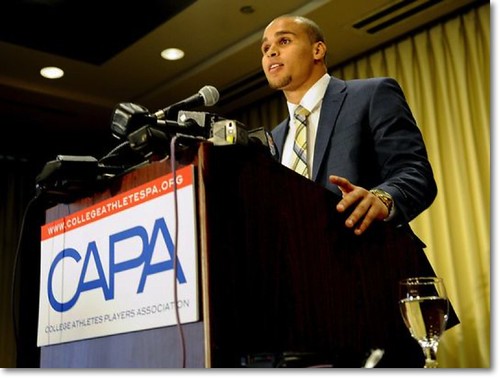
If you're in search of good news, look no further. The Big Ten just announced their intention to, among other protections for student-athletes, ensure that scholarships cover the full cost of attedance and are guaranteed for the duration of a S-A's undergraduate studies. The full statement from the Big Ten follows (also posted on the official Big Ten site with PDFs of the statements referred to in the second paragraph):
ROSEMONT, Ill. – The Big Ten Conference announced today that it has notified the National Collegiate Athletic Association (NCAA) of initial recommendations designed to provide enhanced benefits for student-athletes that are members in good standing with their individual universities as part of the NCAA’s new autonomy governance structure.
For the past two years, the conference has publicly stated its desire to continue providing student-athletes with an unmatched educational and athletic experience, including comments made by Commissioner James E. Delany at the July 2013 Big Ten Football Media Days, at the Collegiate Commissioners Association meeting on September 25, 2013, at the July 2014 Big Ten Football Media Days, and in statements issued by the Big Ten Council of Presidents/Chancellors on June 1, 2014 and June 24, 2014.
The Big Ten will work to implement the following proposals through individual institutional action, conference-wide action or under the NCAA autonomy governance structure:
- Cost of Education: Redefine full grant-in-aid to meet a student-athlete’s cost of education, as determined by the federal government.
- Multi-Year Scholarships: Guarantee all scholarships. If a student-athlete is no longer able to compete, for whatever reason, there should be no impact on institutions’ commitment to deliver an undergraduate education.
- Lifetime Educational Commitment: Ensure that scholarships are available for life. If a student-athlete leaves a university for a professional career before graduating, whether the career materializes, and regardless of its length, the scholarship will be honored after his or her playing days are complete.
- Medical Insurance: Provide improved, consistent medical insurance for student-athletes.
The Big Ten has also agreed to address additional student-athlete welfare issues including, but not limited to, health and safety, time demands and comprehensive academic support by way of a “Resolution” that creates a specific pathway and timeline for implementation.
The Big Ten Conference is an association of 14 world-class universities committed to the pursuit and attainment of athletic and academic excellence. Big Ten institutions feature broad-based athletic programs which provide nearly $200 million in direct financial aid to almost 9,500 student-athletes on 350 teams in 42 different sports.
We look forward to working with the ACC, Big 12, Pac-12 and SEC through the NCAA autonomy governance structure toward adoption and implementation of these proposals.
This is huge news and a big step forward for the rights of student-athletes. In addition, that's quite a loaded last line of the statement—the attention now turns to the other Power 5 conferences and the NCAA.

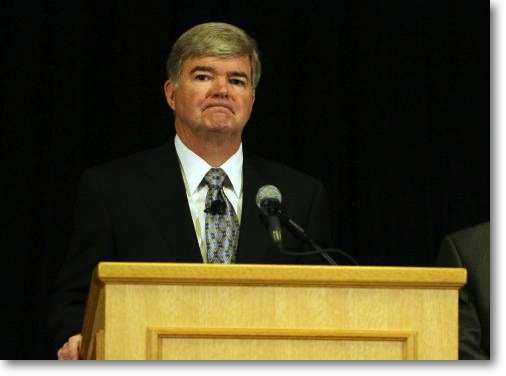
Leave it to the NCAA to get the Penn State sanctions right, yet still find a way to screw it up.
The debate surrounding the—wait for it—unprecedented penalties handed down to the PSU football program has largely hinged on whether or not the NCAA had any jurisdiction at all over this issue, one that at face value went so far beyond football that it seemed inappropriate and insensitive to make it a football issue.* Criminal matters should be handled by criminal courts, so what basis does the governing body of college sports have to essentially decimate PSU football?
Yesterday, Mark Emmert decided to justify his swift and forceful actions by indicting the very culture that funnels billions into the pockets on his organization:
"The fundamental message here, the gut-check message is, do we have the right balance in our culture?" he said. "Do we have, first and foremost, the academic values of integrity and honesty and responsibility as the drivers of our university? Or are we in a position where hero worship and winning at all costs has subordinated those core values?"
In doing so, Emmert opened up the NCAA to—very fair—criticism about the sheer hypocrisy of the above statement, and that criticism extends to the penalties themselves**. Slamming "hero worship" when the NCAA extravagantly profits from—to take one small example—NCAA Football video games that advertise "a deeper game for a deeper devotion," is remarkably tone-deaf. The NCAA doesn't make their money from "academic values", but from fanatics (it's called March Madness, for chrissakes) who sanctify figures like JoePa and Coach K and Woody and Bo and the athletes upon whose backs this empire is built. The NCAA asking us to suddenly find perspective is like TMZ chastising their readers for caring too much about the lives of people they don't actually know; it's a nice sentiment coming from precisely the wrong source.
What I find more remarkable, however, is that the NCAA had the proper basis to levy these sanctions sitting right in front of them, and instead they took the hypocrisy route. It's simple: Penn State gained a massive, long-term competitive advantage by keeping Sandusky's heinous crimes quiet.
Why did Joe Paterno, when confronted with clear-cut evidence of Sandusky's sexual abuse of Victim 2, decide against alerting the Department of Child Welfare? It wasn't to cover for a friend; it's been well-documented that Paterno and Sandusky weren't exactly close off the field. No, this was a football decision, one that kept up Paterno and Penn State's untarnished image while avoiding a scandal that—even if Paterno did the right thing and reported Sandusky—would bring an enormous amount of negative attention to the program and potentially threaten Paterno's job status.
In March of 2002, when Mike McQueary reported what he had seen in the Penn State locker room to Paterno, Penn State was coming off back-to-back five-win seasons. Paterno was 75 years old, reaching the point where questions abound about his ability to run a successful football program, if he could retire with dignity before PSU would be forced to push him out the door. I can't claim to know the motivation behind the cover-up, but the timing of the 2002 allegations could not have been worse for Paterno from a football perspective.
Instead of facing the situation head-on, Paterno and Penn State kept quiet, and Penn State's program turned around; from 2002-2011, the Nittany Lions went 83-43 with two shared conference titles and two BCS bowl appearances. I have a hard time imagining that Penn State would have compiled such a lofty record while dealing with sexual abuse charges against their former defensive coordinator. I'm guessing JoePa thought much the same.
When looking at the issue from that perspective, the NCAA had little choice but to bring the hammer down on a Penn State program that gained an enormous, decade-long competitive advantage by covering up crimes of a most despicable nature. The scope of the penalties, which almost certainly doom PSU to a decade or more at the bottom of the college football barrel, are just given the severity of the crimes committed*** and their on-field consequences. While I commend the NCAA and Mark Emmert for coming through with these penalties, I have no earthly idea why they decided to base them on hypocrisy when there was such an obvious and justifiable alternative.
------------------
*The other point of contention was the potentially disconcerting precedent set by Emmert. To that, I'll say this: when do you expect something remotely close to the PSU situation to arise again? And, if we're unfortunate enough that something similar does occur, would it not merit the same level of action? I don't believe Emmert will exercise this executive power even for cheating as severe as Miami's or UNC's.
**Spencer Hall and Drew Magary, most notably, fell on the "scathing" end of the spectrum.
*** I'm referring to the cover-up, not Sandusky.
36